
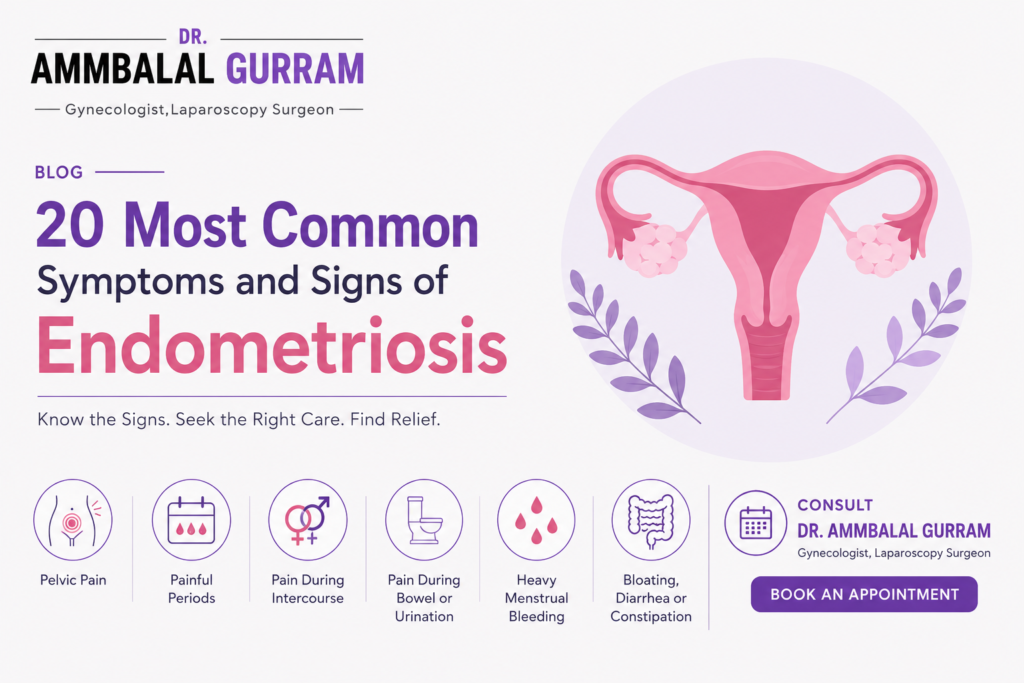
Endometriosis is a chronic gynecological condition in which tissue similar to the lining of the uterus grows outside the uterus. It can affect the ovaries, fallopian tubes, pelvic lining, bowel, bladder and other surrounding areas. The condition can cause inflammation, scar tissue and pain, and in some women it may also affect fertility.
While some women experience severe symptoms, others may have mild symptoms or no obvious symptoms at all. Because painful periods are often considered normal, endometriosis can sometimes go unrecognized for years. Persistent or worsening menstrual and pelvic symptoms should therefore be evaluated by a gynecologist
Table of Contents
20 Common Signs and Symptoms of Endometriosis
1. Severe Period Pain symptoms of endometriosis
One of the most recognized symptoms is intense menstrual pain. The pain may begin before the period and continue for several days during menstruation. Unlike ordinary period cramps, endometriosis-related pain may interfere with work, sleep, exercise and everyday activities.
2. Chronic Pelvic Pain symptoms of endometriosis
Some women experience pelvic pain even when they are not menstruating. It may feel like a persistent ache, pressure or sharp pain in the lower abdomen or pelvis.
3. Pain That Gets Worse During Period symptoms of endometriosis
Endometriosis-related pain commonly follows the menstrual cycle. Symptoms may become particularly intense immediately before or during menstruation because endometriosis lesions respond to hormonal changes.
4. Pain During Sexual Intercourse
Deep pain during or after sexual intercourse can be associated with endometriosis, particularly when lesions or inflammation involve structures around the vagina, uterus or pelvic organs.
5. Pain During Bowel Movements
When endometriosis affects areas around the bowel or rectum, bowel movements can become painful, particularly during menstruation.
6. Painful Urination
Endometriosis involving or irritating tissues around the bladder or urinary tract can cause pain while urinating, with symptoms sometimes becoming more noticeable during periods.
7. Heavy Menstrual Bleeding
Some women with endometriosis experience unusually heavy menstrual bleeding or periods that are difficult to manage. Heavy bleeding should be discussed with a gynecologist because several gynecological conditions can cause it.
8. Bleeding Between Periods
Unexpected spotting or bleeding between menstrual periods can occur in women with different gynecological conditions. If it is persistent or unusual for you, a medical evaluation can help determine the cause.
9. Lower Back Pain
Endometriosis-associated pelvic inflammation can sometimes be accompanied by lower back pain, especially around menstruation.
10. Abdominal Bloating
Some women experience abdominal bloating, particularly around their periods. When bloating repeatedly occurs alongside significant pelvic or menstrual symptoms, it should not simply be dismissed as normal period discomfort.
11. Nausea
Pain and gastrointestinal involvement can sometimes be accompanied by nausea. Nausea may become more noticeable when menstrual pain is severe.
12. Diarrhea
Hormonal changes and pelvic inflammation can contribute to bowel-related symptoms such as diarrhea, particularly around menstruation.
13. Constipation
Constipation can also occur, particularly when pelvic endometriosis affects or irritates structures around the bowel.
14. Alternating Diarrhea and Constipation
Some women notice changes in bowel habits around their menstrual cycle, including alternating constipation and diarrhea. These symptoms can have many possible causes, so proper evaluation is important.
15. Pain That Spreads to the Legs or Hips
Pelvic pain associated with endometriosis can sometimes extend toward the hips, thighs or legs. The location and severity of pain can vary depending on where endometriosis lesions are present.
16. Fatigue symptoms of endometriosis
Living with chronic pain, inflammation, sleep disruption and heavy periods can contribute to significant tiredness and reduced energy.
17. Pain That Interferes With Daily Activities
A particularly important warning sign is when period or pelvic pain regularly causes you to miss work, college, exercise, social activities or normal household responsibilities. Severe menstrual pain that disrupts everyday life deserves medical attention.
18. Difficulty Getting Pregnant symptoms of endometriosis
Endometriosis can be associated with infertility. Inflammation and adhesions may affect the ovaries, fallopian tubes and surrounding pelvic structures. Some women first discover they may have endometriosis while undergoing evaluation for difficulty conceiving.
19. Pain That Continues Despite Usual Painkillers
If your menstrual or pelvic pain repeatedly remains severe despite commonly used pain-relief measures, it is important to speak with a gynecologist rather than repeatedly self-medicating.
20. Symptoms That Become Progressively Worse
Endometriosis symptoms can change over time. Increasing period pain, worsening pelvic pain, increasingly heavy periods, bowel or bladder symptoms, or increasing difficulty conceiving should prompt a gynecological evaluation.
Is Severe Period Pain Always symptoms of endometriosis?
No. Severe period pain can have several causes, including endometriosis, adenomyosis, fibroids and ovarian conditions. A gynecologist may review your menstrual history, symptoms and medical history and may recommend a pelvic examination and imaging such as ultrasound when appropriate.
The important point is that severe period pain should not automatically be considered normal—especially when it repeatedly affects your quality of life.
How Is Endometriosis Treated?
There is currently no single treatment that permanently cures endometriosis in every patient. Treatment is individualized according to symptoms, disease severity, fertility plans, age, medical history and personal preferences.
Medicines for Symptom Relief
For many women, medication is an important first step in controlling endometriosis-related pain.
Depending on the individual situation, treatment may include:
- Pain-relieving medicines such as NSAIDs
- Hormonal contraceptive treatments
- Progestin-based treatment
- Hormonal IUDs in appropriate patients
- GnRH-based medicines in selected cases
- Other medications based on the patient’s symptoms and treatment goals
These medicines may help reduce pain and suppress hormonal stimulation of endometriosis. However, they should be taken only after discussing the appropriate treatment with a qualified doctor.
Medicines can provide significant symptom relief, but they do not necessarily remove existing endometriosis lesions. The treatment plan therefore needs to be reviewed if symptoms remain severe or return.
When May Surgery Be Considered?
Surgery is not automatically required for every woman with endometriosis. However, it may be considered when symptoms are severe, medical treatment does not provide adequate relief, endometriosis affects fertility, or there is significant disease involving pelvic organs.
Laparoscopy is a minimally invasive surgical approach for Endometriosis that can be used to evaluate and treat. If endometriosis lesions are identified, they may sometimes be removed during the same procedure.
For severe or complex cases, the gynecologist will discuss whether surgery offers a meaningful benefit compared with continued medical management.
It is also important to understand that surgery does not guarantee that endometriosis will never return. Pain can recur in some women after surgery, which is why follow-up and an individualized long-term treatment plan are important.
When Should You See a Gynecologist?
Consider scheduling a gynecological consultation if you experience:
- Period pain that prevents normal activities
- Pelvic pain that continues outside your period
- Pain during intercourse
- Pain during bowel movements or urination
- Very heavy or unusual menstrual bleeding
- Persistent bloating or bowel symptoms around your period
- Difficulty getting pregnant
- Pain that does not improve with appropriate treatment
- Symptoms that are becoming progressively worse
Early evaluation can help identify the likely cause of your symptoms and allow treatment options to be discussed before pain and other problems significantly affect your quality of life.
Consult Dr. Ammbalal Gurram, Gynecologist in Pune
If you are experiencing severe period pain, chronic pelvic pain, suspected endometriosis or related gynecological symptoms, you can consult Dr. Ammbalal Gurram, a gynecologist and laparoscopic surgeon serving patients in Pune and Pimpri-Chinchwad.
According to his practice website, Dr. Gurram provides gynecological and minimally invasive surgical care and consults at Manipal Hospital, Baner and Ashwinii Nursing Home, Thergaon. His practice also provides laparoscopic and gynecological surgical services.
Book an Appointment with Dr. Ammbalal Gurram
If you are experiencing severe or recurring menstrual pain, do not simply continue taking pain medicines without medical evaluation. A gynecologist can assess your symptoms, determine whether endometriosis or another condition may be responsible, and discuss whether medication, monitoring or surgical treatment is appropriate.