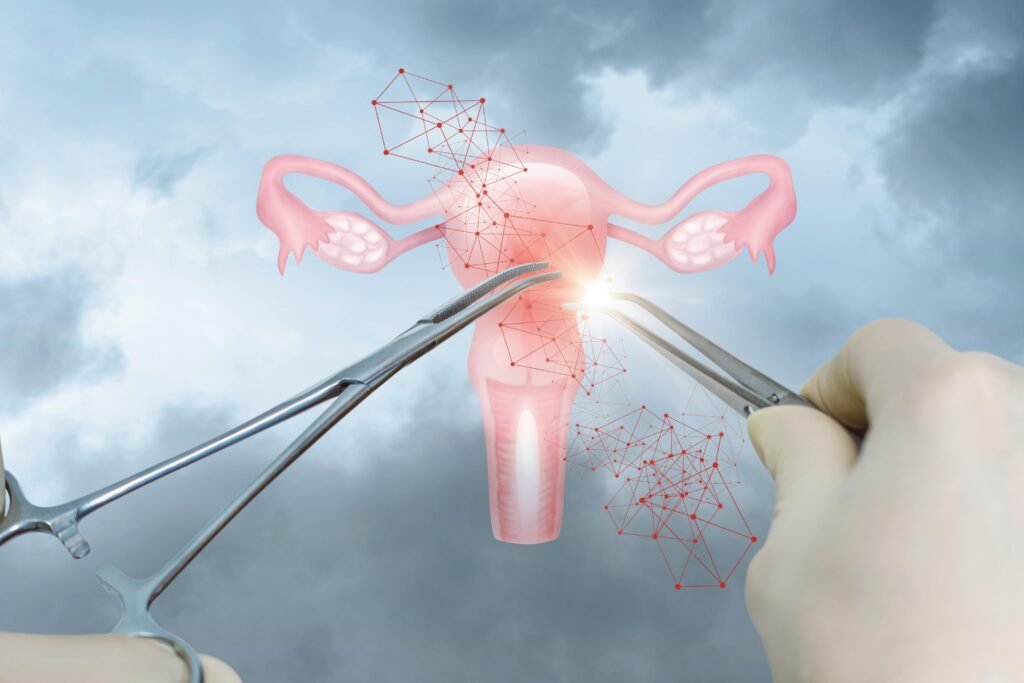
Minimally invasive gynecology surgery is a group of procedures that reach the pelvic organs through tiny incisions or natural body openings. A camera sends a magnified, high-definition view to a monitor and the surgeon works with slim instruments guided by that image. The main approaches are:
• Laparoscopy: Three or four cuts of about 5 to 10 mm on the abdomen, with one usually hidden in the navel. It is used for ovarian cysts, fibroids, endometriosis, ectopic pregnancy and hysterectomy.
• Hysteroscopy: A thin telescope is passed through the cervix into the uterus, so there is no cut on the skin at all. It is used for polyps, fibroids inside the uterine cavity, a uterine septum and some causes of abnormal bleeding.
• Robotic-assisted surgery: A form of laparoscopy in which the surgeon controls wristed instruments from a console. It can help in complex cases such as deep endometriosis, multiple fibroids or a hysterectomy after previous operations. This option is available at Manipal Hospital, Baner.
• Vaginal surgery: Some operations, including certain hysterectomies and prolapse repairs, are done through the vagina with no abdominal incision.
Dr. Ammbalal Gurram is particularly recognised for combining these approaches skilfully depending on what each case requires.
Key takeaway: Laparoscopy works inside the abdomen, hysteroscopy works inside the uterus and robotic surgery is an advanced form of laparoscopy. All three avoid a large abdominal opening.
Dr. Ammbalal Gurram is the Head of the Department and Consultant in Obstetrics and Gynaecology at Manipal Hospital, Baner, Pune. He is also associated with Ashwinii Nursing Home, Thergaon. His qualifications include MBBS, DGO, DNB, MNAMS and fellowship training in Minimal Access Surgery. His clinical practice includes laparoscopic, hysteroscopic, robotic-assisted and vaginal procedures, along with obstetric care, including high-risk pregnancy management. Learn more about his qualifications and professional background on the About Dr. Ammbalal Gurram page.
Keyhole surgery is not suitable for every woman. Dr. Ammbalal Gurram, a minimally invasive gynecology surgeon in Pune, may advise open surgery in these situations:
Very large masses: A very large uterus or ovarian mass may not be removable safely through small openings.
Dense scar tissue: Several previous abdominal operations can leave adhesions that make keyhole access risky.
Suspected cancer: Some cancers need wider surgery and staging, such as radical hysterectomy surgery, and the surgeon decides the approach case by case.
Medical conditions: Certain heart or lung problems may make the gas and the head-down position used in laparoscopy unsafe.
In some cases, the surgeon converts a planned keyhole procedure to open surgery during the operation for patient safety. The surgical team discusses this possibility with the patient and takes consent before surgery.
Dr. Ammbalal Gurram is a Gynecologist in Pune with 26 years of clinical experience in gynecology. His practice focuses on minimally invasive gynecology, and he has fellowship training in advanced laparoscopy. He performs laparoscopic, hysteroscopic and robotic-assisted procedures. The choice of approach depends on the diagnosis, the scan findings and the patient’s health, and he discusses the available options with their benefits and risks before surgery.