Laparoscopic Management of Adnexal Mass
Laparoscopic Adenomyomectomy in Pune
Laparoscopic adenomyomectomy is a minimally invasive keyhole surgery to remove adenomyosis tissue from the uterine wall — without removing the uterus itself. Using a thin camera and small instruments through 3–4 tiny incisions, the surgeon identifies and excises the adenomyotic lesions embedded in the uterine muscle, then repairs the wall precisely. It is the only surgical option that treats adenomyosis while preserving the uterus and fertility.
Over-the-Counter (OTC) Medication Guidance
Other Service
Take the First Step to Better Health Today
What Does That Actually Mean?
If you have spent months — or years — struggling with periods that are brutal, unpredictable, and exhausting, and you have finally been given the word “adenomyosis,” you probably have more questions than answers. What is it exactly? Why does it cause so much pain? And most importantly: do you have to lose your uterus to get better?
This page gives you straight answers, written for a patient — not a medical textbook. By the time you finish reading, you will understand what adenomyosis is, what laparoscopic adenomyomectomy involves, what recovery looks like, and why Dr. Ammbalal Gurram is the right surgeon to trust with this specific procedure in Pune.
What Is Adenomyosis?
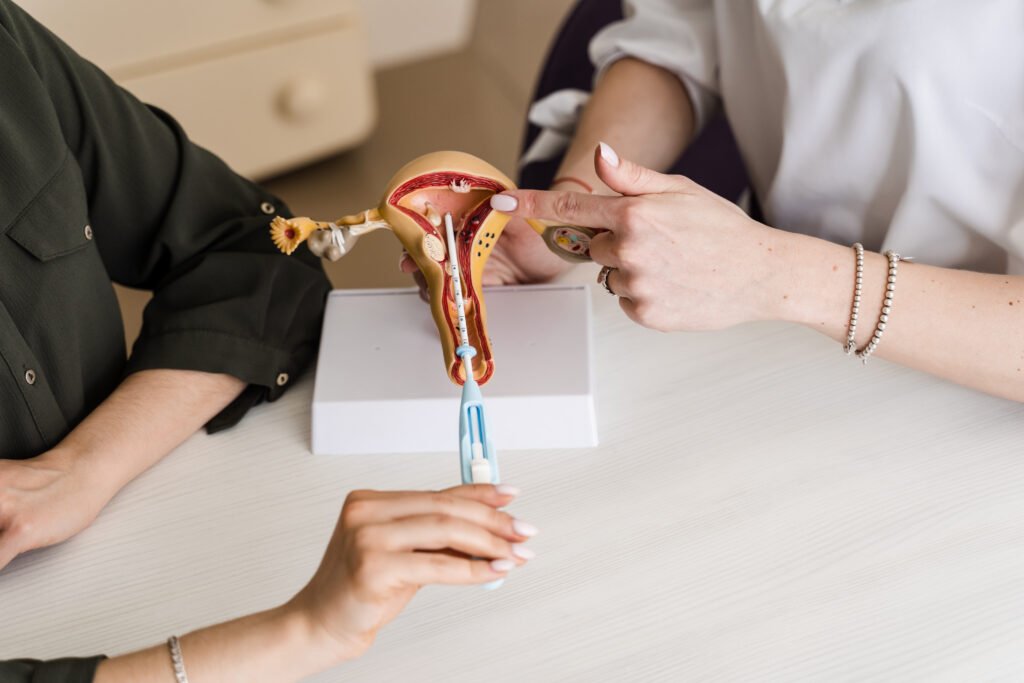
Your uterus has two main layers: the inner lining (called the endometrium) and the muscular wall (called the myometrium). In adenomyosis, cells that belong only in the inner lining migrate into — and grow inside — the muscle wall. They should not be there. But they are, and they respond to your monthly hormonal cycle just like normal lining cells do. They swell, bleed, and shed — but because they are trapped inside muscle tissue, the blood has nowhere to go.
The result is a uterus that becomes enlarged, boggy, and inflamed every month. The symptoms this creates are some of the most disruptive in gynaecology:
| Symptom | Why Adenomyosis Causes It | How Common? |
|---|---|---|
| Extremely heavy periods (menorrhagia) | Enlarged uterus bleeds more; muscle cannot contract properly to stop flow. | Very common — affects most patients. |
| Severe cramping during periods | Trapped blood causes intense pressure inside the muscle wall. | Very common. |
| Painful sex (dyspareunia) | Uterus is tender and inflamed; deep penetration causes pain. | Common. |
| Chronic pelvic pain (non-period) | Ongoing inflammation in the uterine wall. | Moderate frequency. |
| Bloating and feeling of fullness | Uterus is significantly enlarged (can reach 2–3× normal size). | Common. |
| Prolonged or irregular bleeding | Hormonal disruption from abnormal endometrial tissue in the muscle. | Common. |
| Difficulty getting pregnant | Implantation affected; uterine contractions abnormal. | Less common but significant. |
What Medicines Do
- Reduce period bleeding temporarily (hormonal pills, IUD)
- Suppress symptoms by suppressing ovulation (GnRH agonists — injections)
- Provide temporary pain relief (NSAIDs, antispasmodics)
- Create a temporary "medical menopause" to shrink lesions
What Surgery (Adenomyomectomy) Does
- Physically removes adenomyotic tissue from the uterine wall
- Reduces uterine volume significantly
- Relieves pain at the source — not just the symptom
- Preserves the uterus and fertility potential
- Provides durable improvement in most patients
What Medicines Do
- Women with significant symptoms that have not responded adequately to 6+ months of medical treatment
- Women who want to preserve their uterus and avoid hysterectomy
- Women who want to improve fertility prospects affected by adenomyosis
- Women with focal adenomyosis (localised to one area of the uterine wall — best surgical results)
- Women in whom MRI or ultrasound confirms adenomyotic lesions amenable to excision
Why Laparoscopic — Not Open Surgery?
Adenomyomectomy can theoretically be done through an open abdominal incision. But laparoscopic surgery — the keyhole approach — is now the preferred route in skilled hands, and for good reason. The comparison is clear:
| Factor | Laparoscopic Adenomyomectomy | Open Adenomyomectomy |
|---|---|---|
| Incisions | 3–4 cuts under 1 cm each | 8–12 cm abdominal cut |
| Visible scar | Minimal — nearly invisible | Permanent lower abdominal scar |
| Post-op pain | Mild — managed with tablets | Significant — stronger medication needed |
| Hospital stay | 1–2 days | 3–5 days |
| Return to normal life | 2–4 weeks | 5–8 weeks |
| Camera magnification | HD view — better lesion identification | Direct view only |
| Adhesion risk | Lower | Higher |
| Available with Dr.Gurram | ✔ Preferred approach | Yes, where anatomy requires it |
What We Offers
Personalized Healthcare Solutions for Every Stage of Life
Expert gynecological care focused on your comfort, health, and confidence. We offer comprehensive women’s healthcare, including routine exams, pregnancy care, and treatment for a wide range of conditions.
What Happens During Laparoscopic Adenomyomectomy? (Step by Step)
Surgery feels less daunting when you know exactly what will happen. Here is the complete walkthrough — from the morning you arrive to the moment you go home.
BEFORE SURGERY — Pre-operative Preparation
- MRI pelvis (preferred over ultrasound for adenomyosis — shows extent and depth of lesions precisely)
- Blood tests including full blood count (anaemia is common with heavy periods — may need iron supplementation first)
- Anaesthetic fitness assessment
- Dr. Gurram reviews your MRI with you — marks which areas of the uterine wall are affected and discusses the surgical plan
- GnRH agonist injection 1–2 months before surgery is sometimes prescribed to shrink lesions and reduce blood loss during surgery
- Fasting from midnight before your operation day
Step 1 — General Anaesthesia
You are fully asleep throughout. Laparoscopic adenomyomectomy is always performed under general anaesthesia — you feel nothing. The anaesthesia team at both Manipal Hospital Baner and Ashwinii Nursing Home Thergaon is experienced in complex gynaecological procedures.
Step 2 — Creating the Operating Space
Three to four tiny incisions — each under 1 cm — are made on the lower abdomen. Carbon dioxide gas is gently introduced through a small needle to inflate the abdominal cavity, creating safe working space between the organs. Trocars (thin tubes) are placed through the cuts.
Step 3 — Mapping the Adenomyosis
The laparoscope — a high-definition camera — goes in through the navel port. Dr. Gurram systematically examines the entire uterus on screen. Adenomyotic areas appear thickened, discoloured, and irregular compared to normal uterine muscle. The pre-operative MRI guides exactly where to operate.
Step 4 — Excising the Adenomyotic Tissue
This is the most technically demanding part of the procedure — and where surgical experience matters most. Dr. Gurram makes precise incisions into the uterine wall over the affected areas, carefully excises the embedded adenomyotic tissue, and removes it. The goal is to take enough tissue to relieve symptoms while preserving as much healthy muscle as possible for uterine integrity and future pregnancy.
Unlike fibroid removal (myomectomy), adenomyosis does not have clear borders — it blends into surrounding tissue. This is why this surgery requires a surgeon with extensive laparoscopic experience and a detailed understanding of uterine anatomy. Dr. Gurram’s fellowship training and 2,000+ surgical cases provide exactly this.
Step 5 — Closing the Uterine Wall
Once the adenomyotic tissue is removed, the uterine wall is sutured closed in multiple layers using absorbable sutures. Meticulous closure is critical — it determines whether the uterus heals strongly, whether future pregnancy is safe, and whether blood loss is controlled. This step is where surgical precision has the most long-term impact.
Step 6 — Recovery Begins
Instruments are removed, the gas is released, and the tiny incisions are closed with a single stitch each. Total operating time: typically 90–150 minutes depending on the extent of adenomyosis. Most patients are awake and talking within an hour. Fluids begin the same evening. Discharge is typically within 24–48 hours.
Recovery After Laparoscopic Adenomyomectomy — Week by Week
One of the biggest relief factors for patients who choose the laparoscopic route is how much faster recovery is compared to open surgery. Here is what to expect:
| Timeframe | How You Will Feel | What You Can Do |
|---|---|---|
| Day 1 (Hospital) | Groggy; mild abdominal bloating; possible shoulder ache from CO₂ gas (normal and temporary). | Bed rest; assisted corridor walking; clear fluids. |
| Day 2 (Discharge) | Noticeably better; mild port site soreness. | Slow walking at home; stairs are fine. |
| Week 1 | Fatigue; abdominal tenderness; pain tablets 2–3 times daily. | Light indoor activity; avoid lifting and driving. |
| Week 2 | Energy returning; tenderness improving; most people stop pain tablets. | Short outdoor walks; work from home (desk job). |
| Week 3 | Near-normal energy; port scars healing. | Office return for sedentary jobs. |
| Week 4–6 | Full recovery for most; follow-up appointment with your doctor. | Resume all activities including exercise and driving. |
| First 2–3 Cycles | Periods may be lighter and less painful almost immediately; full hormone normalization by the third cycle. | Monitor symptoms and report any concerns to your doctor. |
| 3–6 Months | Uterus fully healed; pregnancy planning can be discussed. | Follow your doctor's advice based on your individual case. |
DR. GURRAM'S CLINIC Post - Op Care Notes from DR. Gurram Clinic
- Walk a little from Day 2 — reduces clot risk and helps clear the CO₂ gas discomfort
- Shoulder/upper back ache for 24–48 hours is from residual gas — harmless, resolves on its own
- No heavy lifting (>2 kg), strenuous exercise, or sexual activity for 6 weeks
- Iron supplementation will be continued post-op if you were anaemic before surgery
- Your first period after surgery is a key indicator — most patients notice improvement immediately
- Contact the clinic if: fever above 38°C, heavy vaginal bleeding, severe worsening pain, or foul-smelling discharge
What Changes After Laparoscopic Adenomyomectomy — Real Patient Benefits
Women who have this surgery often describe the improvement in their quality of life as dramatic. The months of dread before each period, the days lost to pain, the iron tablets, the fatigue — these often improve significantly within the first 2–3 cycles after surgery.
| Problem Before Surgery | What Typically Improves After Adenomyomectomy |
|---|---|
| Soaking through pads/tampons every 1–2 hours | Significant reduction in bleeding volume — most patients experience a 50–80% improvement. |
| Debilitating period cramps | Major improvement in pain; cramps often become manageable or disappear completely. |
| Chronic pelvic pressure or heaviness | Usually resolves as the uterus returns closer to its normal size. |
| Pain during sexual intercourse | Improves in the majority of patients as uterine inflammation decreases. |
| Anaemia caused by chronic blood loss | Gradually resolves once heavy bleeding stops, leading to improved energy levels. |
| Bladder pressure or frequent urination | Improves as the uterus becomes smaller after surgery. |
| Days lost from work or daily activities every month | Most patients regain 3–5 productive days each month that were previously affected by symptoms. |
Get Pregnant After This Surgery?
For many women considering laparoscopic adenomyomectomy, this is the most important question of all. The answer requires honesty rather than false reassurance.
Laparoscopic adenomyomectomy is specifically chosen to preserve the uterus for patients who want to keep their fertility options open. The procedure removes adenomyotic tissue, reduces uterine inflammation, and — in cases where adenomyosis was distorting the uterine cavity or affecting implantation — can meaningfully improve pregnancy prospects.
Why Dr. Ammbalal Gurram Is the Right Surgeon for Laparoscopic Adenomyomectomy in Pune
Adenomyomectomy is one of the most technically challenging procedures in minimally invasive gynaecology. Unlike fibroid removal, adenomyotic tissue has no clear border — it blends into healthy muscle. Excising enough to relieve symptoms, while leaving enough for a structurally sound and fertile uterus, is a judgment call that only comes with deep experience.
This is precisely why the surgeon you choose for this procedure matters more than it does for more routine operations.
Make An appoinment
Schedule your appointment quickly and easily. Choose a date and time that fits your schedule, and our team will be ready to assist you with personalized care and attention.
Consultation
Get expert guidance tailored to your needs. Schedule a consultation with our experienced professionals to discuss your concerns and receive personalized recommendations.
Begin Your Treatment
Start your journey toward better health with a personalized treatment plan tailored to your needs. Our experienced team is committed to providing compassionate care every step of the way.
Dr. Ammbalal Gurram — Why He Is the Right Choice for Adenomyomectomy
- Advanced Fellowship Training: Adenomyomectomy requires fellowship-level laparoscopic technique — precise tissue dissection, meticulous haemostasis, layered uterine closure. Dr. Gurram's training and case volume provide exactly this foundation.
- Director, Centre for Advanced Gynaecology Laparoscopy: Based at Ashwinii Nursing Home Thergaon — this is where complex laparoscopic gynaecology is his daily work, not an occasional referral.
- 2,000+ Surgeries — 98% Success Rate: Surgical volume is the strongest predictor of outcomes in complex laparoscopy. Dr. Gurram's numbers are well above average for a private practice gynaecologist in Pune.
- Uterus-First Philosophy: He does not default to hysterectomy when a uterus-preserving option exists. Adenomyomectomy requires more surgical skill than hysterectomy — surgeons who offer it are specifically committed to preserving what matters to you.
- Honest Pre-op Counselling: He will tell you if your specific adenomyosis pattern is amenable to adenomyomectomy, or if another approach would serve you better. No procedure is recommended that is not genuinely in your best interest.
- 4.9★ from 323+ Verified Reviews | 5,000+ Patients | 26 Years in Pune: The ratings reflect not just surgical skill but the quality of consultations, honest communication, and long-term patient outcomes.
- Two Locations Serving All of Pune & PCMC: Manipal Hospital Baner (Pune West) and Ashwinii Nursing Home Thergaon — most patients in Baner, Aundh, Wakad, Hinjewadi, Pimpri, Chinchwad are within 20 minutes.
Adenomyomectomy is not a simple surgery. It demands an intimate knowledge of the uterine wall, disciplined surgical judgment about how much tissue to remove, and the laparoscopic skill to close the uterus cleanly in a tight operating space. These are skills built over hundreds of similar cases — and that is exactly what Dr. Gurram brings to every patient.
Frequently Asked Questions
Is laparoscopic adenomyomectomy safe?
Yes, in experienced hands. The main surgical risks — bleeding, organ injury, infection — are low when the surgeon performs this procedure routinely. Dr. Gurram's 98% success rate across 2,000+ surgeries reflects consistent, high-quality outcomes. He also conducts a thorough pre-operative assessment to identify and mitigate individual risk factors.
How is adenomyomectomy different from hysterectomy?
Hysterectomy removes the entire uterus — adenomyomectomy keeps it. The choice depends on your symptoms, the extent of adenomyosis, your age, and whether you want to preserve fertility or simply your uterus. Dr. Gurram recommends adenomyomectomy for women who do not want hysterectomy and whose adenomyosis pattern allows for meaningful tissue excision.
Will this surgery cure my adenomyosis permanently?
Honest answer: adenomyomectomy provides significant and lasting symptom relief for most patients, but it is not a guaranteed permanent cure. Because adenomyosis is hormonally driven, new lesions can develop over time. Most patients enjoy several years of improved quality of life. Completing a pregnancy, or reaching natural menopause, significantly reduces recurrence risk.
What if my adenomyosis is diffuse (throughout the whole uterus)?
Focal adenomyosis — where the disease is concentrated in one area — gives the best surgical results. Diffuse adenomyosis (involving the entire uterine wall) makes complete excision more challenging and carries a higher risk of inadequate symptom relief or weakening the uterine wall excessively. Dr. Gurram reviews your MRI carefully and tells you honestly whether adenomyomectomy is a good option for your specific case — or whether another approach (hormonal management, hysterectomy) would serve you better.
How soon will I know if the surgery worked?
Most patients notice an improvement from their very first period after surgery. Heavy bleeding typically reduces significantly from Cycle 1. Pain improvement may take 2–3 cycles as the uterus fully heals. By the 3-month follow-up appointment with Dr. Gurram, most patients have a clear picture of how much the surgery has helped.
Is this covered under health insurance in Pune?
Laparoscopic adenomyomectomy is generally covered under health insurance as a planned surgical inpatient procedure. Manipal Hospital Baner is empanelled with most major insurance providers. Contact the clinic on 086007 11131 to confirm your insurer's pre-authorisation requirements before scheduling.
I was told I need a hysterectomy for adenomyosis. Should I get a second opinion?
Yes — and Dr. Gurram specifically welcomes second-opinion consultations. Hysterectomy is appropriate for some patients with severe, diffuse adenomyosis who have completed their family and have not responded to other treatments. But for women who want to preserve their uterus, adenomyomectomy may be a genuine option that deserves proper evaluation. A consultation is the right starting point.
Book an Appointment
Schedule your appointment in just a few clicks. Choose a date and time that works best for you, and our team will be ready to assist you.

Dr. Ammbalal Gurram Trusted gynecologist in pune with 26+ years of experience in advanced women’s healthcare.
Dr Ammbalal Gurram Gynecologist Laparoscopic/Robotic Surgeon in Baner | Best Gynecologist in Baner, Balewadi, PuneManipal Hospitals Baner
Dr Ammbalal Gurram-Best Gynecologist,Gynae Laparoscopic.Hysterectomy,Ovarian Cyst,Fibroid Removal Surgeon in Wakad,Ravet,PCMC
All Rights are Reserved By Dr. Ammbalal Gurram | Website Designed by EDGELINK Technology Pvt Ltd.