
What Is Postpartum Haemorrhage? Warning Signs After Delivery
Bringing a baby into the world is a joyful moment, but the hours and days after birth are just as important as labour itself. Some postpartum bleeding after delivery is completely normal. When the bleeding is heavy or does not slow down, however, it can become an emergency known as postpartum haemorrhage (also spelled postpartum hemorrhage, or PPH).
Postpartum haemorrhage is one of the leading causes of maternal complications worldwide, yet it is highly treatable when recognised early. In this guide, we explain what postpartum haemorrhage is, its causes and risk factors, the warning signs of postpartum haemorrhage, how it is treated, and when you should seek help.
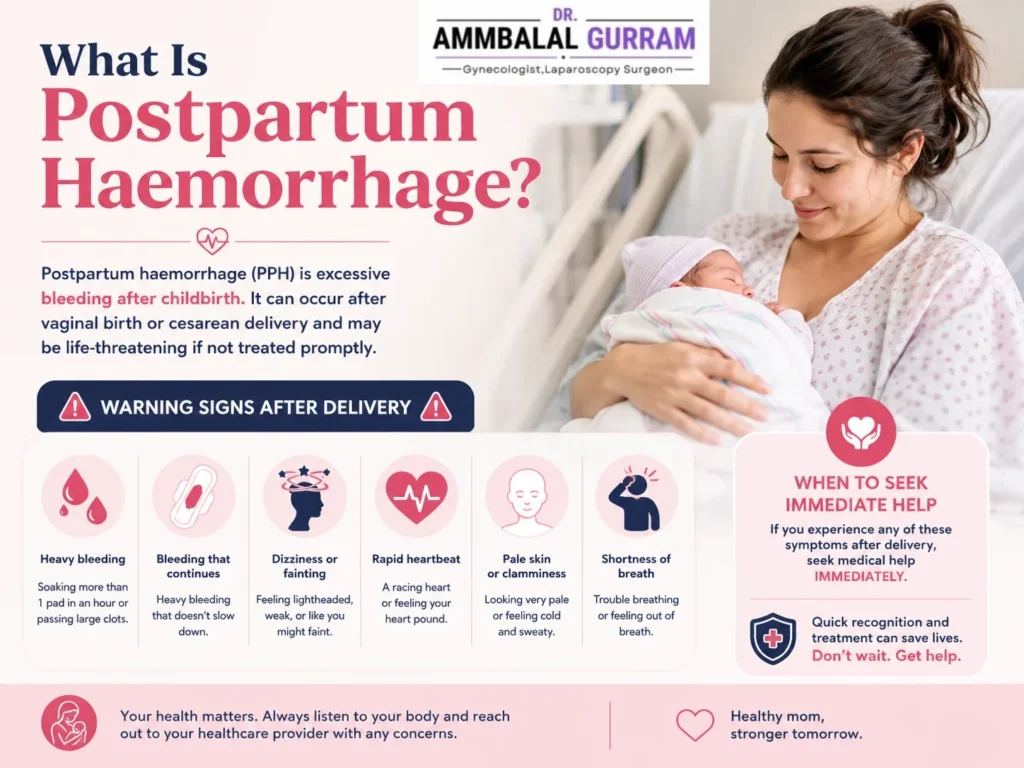
What Is Postpartum Haemorrhage?
Postpartum haemorrhage is heavy or excessive bleeding after delivery. It is commonly defined as blood loss of 1,000 ml (about one litre) or more within 24 hours of birth, or any blood loss that causes signs of low blood volume such as dizziness, a rapid heartbeat or a fall in blood pressure. Doctors also watch closely when blood loss after a vaginal birth crosses 500 ml.
After the baby and placenta are delivered, the uterus (womb) contracts firmly to squeeze shut the blood vessels where the placenta was attached. If this does not happen properly, or if there is an injury or leftover tissue, the result can be heavy bleeding after childbirth and, sometimes, a life-threatening situation. Hemorrhage after pregnancy can occur even when the pregnancy and labour appeared completely normal.
How Soon Can Postpartum Haemorrhage Occur After Delivery?
Postpartum haemorrhage is divided into two types based on timing:
- Primary (early) PPH: Occurs within the first 24 hours after delivery. This is the more common type and usually happens while the mother is still in the hospital, where the medical team can respond quickly.
- Secondary (late) PPH: Occurs between 24 hours and 12 weeks after delivery. Because it can happen after you return home, every new mother and her family should know the signs of postpartum hemorrhage.
Postpartum Haemorrhage Causes: What Causes Heavy Bleeding After Giving Birth?
Doctors often explain the causes of postpartum haemorrhage using four “T”s:
- Tone: The uterus fails to contract firmly after birth (uterine atony). This is the most common cause of excessive bleeding after delivery.
- Trauma: Tears in the cervix, vagina or perineum, or injury to the uterus during delivery.
- Tissue: Parts of the placenta or membranes remain inside the uterus, or the placenta does not separate properly.
- Thrombin: A blood clotting problem, either present before pregnancy or developing around the time of delivery.
Postpartum Haemorrhage Risk Factors
Any woman can experience postpartum haemorrhage, but certain risk factors make it more likely:
- Previous postpartum haemorrhage
- Twin or multiple pregnancy, or a very large baby
- Excess amniotic fluid (polyhydramnios)
- Prolonged or very rapid labour
- Placenta previa, placental abruption or placenta accreta
- Pre-eclampsia or high blood pressure during pregnancy
- Anaemia during pregnancy
- Several previous deliveries
- Caesarean section or assisted delivery with forceps or vacuum
- Fibroids or other uterine conditions
- Bleeding or clotting disorders
Having a risk factor does not mean PPH will definitely occur. It means your obstetrician will plan ahead and monitor you more carefully. Women with these conditions often benefit from High-Risk Obstetrics Care in Pune, where delivery can be planned at a hospital with blood bank access and an experienced obstetric team.
Postpartum Haemorrhage Symptoms and Warning Signs
Knowing the postpartum haemorrhage symptoms helps you act quickly. Some bleeding after birth, called lochia, is expected for several weeks. It is usually heaviest in the first few days and then gradually becomes lighter. The signs of haemorrhage after birth are different, and they need urgent attention.
Warning signs related to bleeding
- Soaking through one sanitary pad in an hour, or needing to change pads very frequently
- Passing blood clots larger than a golf ball
- Bright red bleeding that continues, or suddenly becomes heavy after it had started to slow down
- Bleeding that restarts after you thought it had stopped
Signs that your body is losing too much blood
- Dizziness, light-headedness or fainting
- A fast or pounding heartbeat
- Pale, cold or clammy skin
- Blurred vision
- Extreme weakness or fatigue
- Shortness of breath or chills
- Feeling anxious, confused or as if you are about to pass out
Other signs that need medical attention
- Severe or worsening pain in the lower abdomen
- Swelling, severe pain or a bulging feeling around the vagina or perineum, which may point to a hidden collection of blood (haematoma)
- Foul-smelling vaginal discharge or fever, which may suggest infection or retained tissue
Difference Between Normal Postpartum Bleeding and Haemorrhage
It can be hard for new mothers to know what is normal and what is not. This comparison can help you identify excessive bleeding after delivery:
| Feature | Normal postpartum bleeding (lochia) | Postpartum haemorrhage |
| Amount | Heaviest in the first few days, then steadily lighter | Soaking a pad in an hour or less; bleeding does not slow down |
| Colour | Bright red, then pink, brown and yellowish-white over weeks | Persistent bright red bleeding, or sudden heavy bleeding after it had lightened |
| Clots | Small clots, usually smaller than a coin | Clots larger than a golf ball, or many clots |
| How you feel | Tired but stable | Dizzy, faint, pale, breathless, racing heartbeat |
| Action | Rest, hygiene and routine follow-up | Seek emergency medical care immediately |
How Much Bleeding Is Normal After Delivery?
Most women lose around 500 ml of blood after a vaginal birth and slightly more after a caesarean. In the first few days, bleeding is similar to or heavier than a heavy period. Over the following weeks, it gradually lightens and changes colour. This normal postpartum bleeding can last up to six weeks. A steady, gradual reduction is reassuring. A sudden increase, or bleeding that never seems to ease, is not.
When Is Bleeding After Childbirth Dangerous?
Bleeding after childbirth becomes dangerous when it is heavy enough to cause symptoms of blood loss, or when it does not respond to the normal reduction over time. Soaking a pad in an hour, passing very large clots, or feeling dizzy, faint or breathless are all red flags. Untreated heavy bleeding can lead to a sharp drop in blood pressure, shock and organ damage.
When should I seek medical help for postpartum bleeding? Immediately. If you notice heavy bleeding, large clots or any symptoms of blood loss, treat it as emergency bleeding after childbirth. Call your doctor or go to the nearest hospital straight away, and ask someone to accompany you. Do not drive yourself, and do not wait to see if it settles.
Can Postpartum Haemorrhage Happen After a C-Section?
Yes. Postpartum haemorrhage can occur after both vaginal delivery and a C-section. In fact, the average blood loss during a caesarean is higher than in a vaginal birth, and bleeding can continue from the uterus or the surgical incision afterwards. Your care team monitors you closely after surgery, but the warning signs listed above apply to every mother, regardless of how she delivered.
How to Identify Excessive Bleeding After Delivery
Blood loss is easy to underestimate. A practical approach is to watch these things:
- How quickly you are filling pads. One pad in an hour is a warning sign
- The size and number of clots you pass
- Whether bleeding is slowing down or getting heavier
- How you feel: dizziness, weakness, palpitations or breathlessness can mean significant blood loss, even if the bleeding looks modest
It also helps to let a family member know these signs so that someone can raise the alarm if you are too weak to do so.
Postpartum Haemorrhage Treatment: How Is It Treated?
The aim of postpartum haemorrhage treatment is to stop the bleeding quickly and replace the blood volume that has been lost. The management of postpartum hemorrhage depends on the cause and severity, and usually begins with simple measures before moving to more advanced ones:
- Uterine massage to help the womb contract
- Medicines (uterotonics) that make the uterus contract, and other medicines that reduce bleeding
- Intravenous fluids and, when necessary, blood transfusion
- Repair of tears or removal of any retained placental tissue
- A balloon placed inside the uterus to press on bleeding vessels (uterine balloon tamponade)
- Surgical procedures to control bleeding, and in rare, life-threatening situations, hysterectomy
Most women respond well to first-line measures. Timely recognition and a well-prepared team make the biggest difference. If you are looking for postpartum haemorrhage treatment in Pune or postpartum bleeding treatment in Pune, choose a hospital with round-the-clock obstetric care, a blood bank and facilities for emergency procedures. Dr. Ammbalal Gurram, Gynecologist in Pune, provides gynaecological care and guidance for women seeking gynecology treatments. Postpartum haemorrhage is a medical emergency and requires immediate hospital assessment.
Postpartum Haemorrhage Complications
When PPH is managed promptly, most women recover fully. When treatment is delayed or the blood loss is severe, complications can include:
- Severe anaemia and prolonged fatigue
- Low blood pressure and shock
- Need for blood transfusion
- Damage to organs such as the kidneys, or to the pituitary gland (Sheehan syndrome), in severe cases
- Loss of the uterus (hysterectomy) in rare emergencies, which affects future fertility
- Emotional distress, anxiety or postnatal depression after a frightening birth experience
Postpartum Haemorrhage Prevention
Not every case can be predicted, but postpartum haemorrhage prevention starts long before delivery:
- Attend regular antenatal check-ups so that risk factors like anaemia, high blood pressure or placental position are found early.
- Correct anaemia before delivery. Iron-rich food and supplements, if advised by your doctor, help your body cope better with blood loss.
- Choose the right place to deliver. A hospital with a blood bank, an experienced obstetrician in Pune and emergency back-up is especially important if you are high-risk.
- Share your full history with your doctor, including previous PPH, fibroids, clotting disorders or earlier caesarean sections.
- Active management of the third stage of labour. Giving a uterus-contracting medicine right after birth is a routine, evidence-based step that substantially lowers the risk of PPH.
Post-Delivery Care and Recovery
Good post-delivery care in Pune, or wherever you are, includes monitoring your bleeding, resting, eating nutritious food, drinking plenty of fluids and attending every follow-up visit. After a haemorrhage, you may need iron supplements and a longer hospital stay. Fatigue and breathlessness can linger for some time as your haemoglobin recovers.
Emotional recovery matters as well. An emergency after childbirth can be frightening, and it is normal to need to talk about it. If you feel persistently low, anxious or overwhelmed, speak with your doctor. If you plan another pregnancy, tell your doctor about your PPH history so that the next delivery can be planned with extra care.
Frequently Asked Questions
What are the warning signs of postpartum haemorrhage?
The main warning signs are soaking a pad in an hour, passing clots larger than a golf ball, bleeding that gets heavier instead of lighter, dizziness, a racing heartbeat, pale or clammy skin, blurred vision and severe lower abdominal pain.
How is postpartum haemorrhage treated?
Treatment may include uterine massage, medicines to contract the uterus, intravenous fluids, blood transfusion, repair of tears, removal of retained tissue, a uterine balloon and, rarely, surgery. The approach depends on the cause of the bleeding.
Is postpartum haemorrhage life-threatening?
It can be if not treated promptly, but with timely medical care most women recover fully.
Can postpartum haemorrhage happen again in my next pregnancy?
Having had PPH does raise the chance of it happening again, but with proper planning and monitoring, most women go on to have safe deliveries.
Can postpartum haemorrhage happen after I go home?
Yes. Secondary PPH can occur from 24 hours up to 12 weeks after delivery, so knowing the warning signs matters even after discharge.
Final Thoughts
Postpartum haemorrhage is serious, but it is manageable when recognised early. Trust your instincts: if the bleeding feels too heavy or you simply feel unwell, seek medical help straight away. If you are pregnant, have a high-risk pregnancy, or have recently delivered and have concerns about bleeding, do not ignore it. Seek emergency care when bleeding is severe, and for follow-up, evaluation and gynecology treatments in Pune, you can consult Dr. Ammbalal Gurram, Gynaec Laparoscopic Surgeon in Baner, Pune, for personalised guidance and care.
Clinic address: [Manipal Hospitals Baner, Survey No 111/11/1 Veerbhadra Nagar Rd, Baner – Mahalunge Rd, Baner, Pune, Maharashtra 411069 ]
Phone / WhatsApp: [+918600711131 ]
Clinic address: [Office 1,2, Samarth Carina, 3 &4, Commercia, near Raghavendra Swami Math, Thergaon, Pimpri-Chinchwad, Maharashtra 411033 ]
Phone / WhatsApp: [+9108408919177 ]