Laparoscopic Myomectomy Surgery
Laparoscopic Myomectomy Surgery in Pune
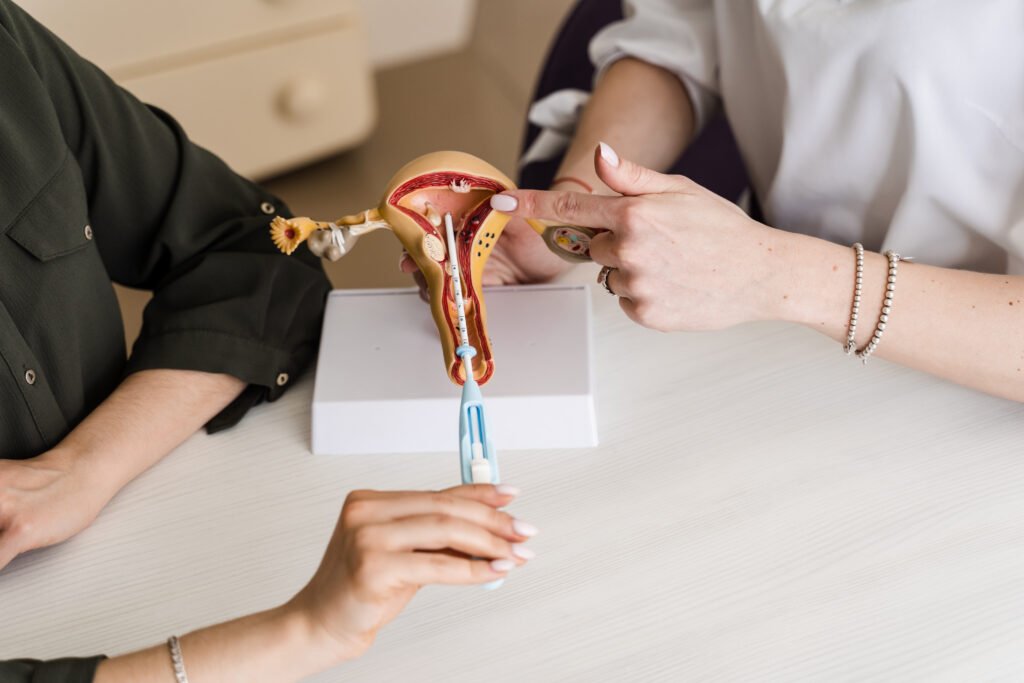
Laparoscopic myomectomy is a keyhole surgery to remove uterine fibroids (non-cancerous growths in the uterus) while keeping the uterus intact. Using a tiny camera and small instruments inserted through 3–4 cuts of less than a centimetre, the surgeon removes the fibroids without opening the abdomen. The result: less pain, shorter hospital stay, faster recovery — and your uterus is preserved.
Fibroids are extremely common. Many women have them and never know. But when fibroids start causing real problems — heavy bleeding that soaks through pads, pelvic pain that interrupts sleep, pressure on the bladder, or difficulty getting pregnant — the question changes from “do I have fibroids?” to “what do I do about them?”
The good news: you have options. And the most important one — laparoscopic myomectomy — lets surgeons remove the fibroids completely while keeping your uterus exactly where it belongs. No uterus removal. No early menopause. No permanent hormonal consequences.
This page answers every question you are likely to have before deciding whether this surgery is right for you.
Over-the-Counter (OTC) Medication Guidance
Other Service
Take the First Step to Better Health Today
What Are Uterine Fibroids, and Why Do They Cause Problems?
Uterine fibroids (also called leiomyomas or myomas) are non-cancerous muscle growths that develop in or on the wall of the uterus. They are not tumours in the cancer sense — they are benign overgrowths of muscle tissue that happen to grow where they should not.
Their size varies enormously: from a pea to, in untreated cases, the size of a melon. Most women have multiple fibroids rather than just one. Their location matters as much as their size:
| Fibroid Location | What It Typically Causes | Medical Term |
|---|---|---|
| Inside the uterine cavity | Very heavy periods, bleeding between periods, miscarriage | Submucosal |
| Within the uterine wall | Heavy bleeding, pelvic pressure, painful periods | Intramural |
| On the outer surface of uterus | Bladder/bowel pressure, feeling of fullness, back pain | Subserosal |
| Hanging on a stalk outside | Sudden severe pain if stalk twists (torsion) | Pedunculated |
What Medicines Can Do
- Reduce period bleeding temporarily
- Shrink fibroids by 30–50% (hormonal injections like GnRH agonists)
- Provide pain relief with NSAIDs
- Manage anaemia caused by heavy bleeding
What Surgery (Myomectomy) Can Do
- Permanently remove the fibroids completely
- Restore normal periods in most patients
- Eliminate pelvic pain and pressure
- Significantly improve chances of pregnancy
- Preserve the uterus — hormones unaffected
Why Laparoscopic Myomectomy — Not Open Surgery?
There was a time when fibroid removal meant a large cut across the lower abdomen, a week in hospital, and 6–8 weeks of recovery at home. That time has passed. Laparoscopic myomectomy achieves exactly the same surgical result — complete fibroid removal with uterus intact — through cuts so small they are measured in millimetres, not centimetres.
Dr. Ammbalal Gurram has performed laparoscopic fibroid removal as a routine procedure for over two decades. Here is how the two approaches compare:
| What Matters to You | Laparoscopic Myomectomy | Open (Abdominal) Myomectomy |
|---|---|---|
| Cuts on your body | 3–4 cuts, each under 1 cm | 8–12 cm horizontal incision |
| Visible scar afterward | Minimal / nearly invisible | Permanent scar on lower abdomen |
| Pain after surgery | Mild — managed with tablets | Significant — needs stronger medication |
| Days in hospital | 1–2 days | 3–5 days |
| Back to normal life | 2–3 weeks | 5–7 weeks |
| Blood loss during surgery | Low | Moderate to high |
| Risk of scar tissue (adhesions) | Much lower | Higher |
| Future pregnancy safety | Good — uterine closure is precise | Good — also well-established |
| Available with Dr. Gurram | ✔ Yes — preferred route | Yes, where indicated |
What Actually Happens During Laparoscopic Myomectomy?
Surgery is less frightening when you know exactly what to expect. Here is a plain-language walkthrough of what happens from the moment you arrive to the moment you go home.
Before Surgery — Your Preparation
- Blood tests, pelvic ultrasound (or MRI for complex cases), and anaesthetic fitness check
- Dr. Gurram marks out the exact number, size, and location of your fibroids on the scan
- Pre-operative fasting from midnight before surgery day
- You arrive at the hospital (Manipal Baner or Ashwinii Thergaon) 2 hours before your scheduled slot
Step 1 — Anaesthesia (You Will Be Fully Asleep)
Laparoscopic myomectomy is performed under general anaesthesia. You will be completely unconscious and feel nothing during the procedure. The anaesthesia team at both of Dr. Gurram’s hospital locations is experienced in gynaecological surgery. Most patients are asleep and ready within 15–20 minutes of entering the operating theatre.
Step 2 — Creating Access (The Small Cuts)
Three to four tiny incisions — each less than 1 cm — are made: one near the navel and the others on the lower abdomen. A thin tube called a trocar is placed through each cut. Carbon dioxide gas is gently introduced to inflate the abdominal cavity, creating space for the instruments to work safely.
Step 3 — Camera In, Fibroids Visible
A laparoscope — a thin telescope with a high-definition camera — is inserted through the navel incision. The image appears on a screen in front of Dr. Gurram, giving him a magnified, clear view of your uterus and all the fibroids. The magnification actually provides better visibility than open surgery in many cases.
Step 4 — Removing Every Fibroid
Using specialised instruments through the other ports, Dr. Gurram makes a precise incision in the uterine wall over each fibroid, then carefully separates and removes it. Each fibroid is extracted through the small incisions (or through a process called morcellation if fibroids are large). This step is the core of the surgery — it requires the technical skill that comes from doing this routinely, which is why volume matters when choosing your surgeon.
Step 5 — Closing the Uterus Precisely
Once all fibroids are out, the uterus is sutured closed in layers using absorbable sutures — exactly as it would be in open surgery. Precise closure is critical for two reasons: it controls bleeding and it ensures the uterine wall is strong enough to support a future pregnancy. This is where Dr. Gurram’s 26 years of laparoscopic expertise makes a real difference.
Step 6 — Waking Up in Recovery
The gas is released, the instruments removed, and the small cuts are closed with a single stitch each. Total operating time is typically 60–120 minutes depending on the number and size of fibroids. You wake up in the recovery room, and most patients are talking and drinking fluids within an hour.
What We Offers
Personalized Healthcare Solutions for Every Stage of Life
Expert gynecological care focused on your comfort, health, and confidence. We offer comprehensive women’s healthcare, including routine exams, pregnancy care, and treatment for a wide range of conditions.
Recovery After Laparoscopic Myomectomy — What to Expect Each Week
One of the biggest fears patients have is: “How long will I be out of action?” With laparoscopic myomectomy, the answer is much shorter than most women expect. Here is an honest, week-by-week breakdown:
| Time After Surgery | How You Will Likely Feel | What You Can Do |
|---|---|---|
| Day 1 (Hospital) | Groggy, mild abdominal bloating from gas, slight shoulder ache (from CO₂ — normal) | Rest; light walking in corridor; clear fluids |
| Day 2 (Discharge) | Significantly better; mild soreness at port sites | Walk slowly at home; stairs are fine |
| Week 1 | Fatigue; some abdominal tenderness; pain tablets needed 2–3 times a day | Light indoor activity; no lifting (>2 kg); no driving |
| Week 2 | Energy returning; tenderness fading; most patients stop pain tablets | Light housework; short walks outside; work from home for desk jobs |
| Week 3 | Near-normal energy; port site scars healing well | Office return possible for non-physical jobs |
| Week 4–6 | Full recovery for most patients; follow-up scan with Dr. Gurram | All activities including exercise and driving |
| 3 Months | Uterus fully healed; menstrual improvement typically obvious by 2nd cycle | Attempting pregnancy can be discussed (usually from 3–6 months post-op) |
Recovery After Laparoscopic Myomectomy — What to Expect Each Week
One of the biggest fears patients have is: “How long will I be out of action?” With laparoscopic myomectomy, the answer is much shorter than most women expect. Here is an honest, week-by-week breakdown:
Recovery Tips From Dr. Gurram's Clinics
- Walk a little from Day 2 — short walks reduce the risk of clots and help with gas pain
- Shoulder and upper back discomfort for 24–48 hours is from the CO₂ gas, not a complication
- Constipation is common after abdominal surgery — increase fluids and eat lightly for the first week
- No sexual activity or heavy lifting for 6 weeks
- Call the clinic immediately if you have fever above 38°C, heavy vaginal bleeding, or severe worsening pain
- Your first period after surgery may be heavier or irregular — this normalises over 2–3 cycles
Make An appoinment
Schedule your appointment quickly and easily. Choose a date and time that fits your schedule, and our team will be ready to assist you with personalized care and attention.
Consultation
Get expert guidance tailored to your needs. Schedule a consultation with our experienced professionals to discuss your concerns and receive personalized recommendations.
Begin Your Treatment
Start your journey toward better health with a personalized treatment plan tailored to your needs. Our experienced team is committed to providing compassionate care every step of the way.
Real Benefits of Laparoscopic Myomectomy — What Changes After Surgery
Women who have this surgery often say the change is significant and fast. Here is what most patients experience once they have healed:
| Symptom Before Surgery | What Typically Happens After Myomectomy |
|---|---|
| Heavy periods that disrupted work and life | 80–90% of patients see significant reduction in bleeding by the 2nd cycle. |
| Pelvic pain or pressure | Resolves in most patients once ibroids are removed. |
| Frequent urination / bladder pressure | Improves significantly as fibroids no longer press on the bladder. |
| Bloated or enlarged abdomen | Returns to normal as the uterus shrinks to its natural size. |
| Difficulty getting pregnant (fibroid-related) | Pregnancy rates improve; success depends on fibroid type and location. |
| Anaemia from blood loss | Iron levels normalise once heavy bleeding stops. |
| Fatigue and low energy | Improves as anaemia resolves over weeks to months. |
Why Dr. Ammbalal Gurram Is the Right Surgeon for Your Laparoscopic Myomectomy
Choosing a surgeon for fibroid removal is not just about finding someone who can technically perform the operation. It is about finding someone who performs it routinely, precisely, and with a genuine understanding of what matters to you — your recovery, your fertility, your life.
Here is why women in Pune, Baner, Thergaon, Pimpri-Chinchwad and across PCMC trust Dr. Gurram specifically for this surgery:
Dr. Ammbalal Gurram — Why He Is the Right Choice
- Volume = Skill: 2,000+ surgeries performed, with laparoscopic procedures making up the majority. Myomectomy is not an occasional case for Dr. Gurram — it is part of his regular operating list. Surgeons who do this frequently have better outcomes.
- Uterine Preservation Is His Priority: Dr. Gurram does not default to hysterectomy when myomectomy is possible. He understands that for many women, keeping the uterus is not just a medical preference — it is a deeply personal one.
- Fellowship-Trained Laparoscopic Technique: Advanced fellowships in laparoscopic and robotic pelvic surgery mean his technique is precise, his suturing of the uterine wall is strong, and his complication rates are well below average.
- Honest Conversations: He will tell you clearly if laparoscopic surgery is or is not the right approach for your specific fibroid pattern. No procedure is pushed if it is not in your best interest.
- Proven Track Record: 98% surgical success rate. 4.9★ rating from 323+ verified Google reviews. 5,000+ patients treated across 26 years.
- Two Convenient Locations: Manipal Hospital Baner (Pune West) and Ashwinii Nursing Home Thergaon (PCMC). Most patients from Baner, Aundh, Wakad, Hinjewadi, Pimpri, Chinchwad are within 20 minutes of one of his clinics.
Frequently Asked Questions
Is laparoscopic myomectomy safe?
Yes — in experienced hands it is a very safe procedure. Dr. Gurram's 98% surgical success rate across 2,000+ surgeries reflects the consistent quality of his outcomes. Serious complications (excessive bleeding, organ injury) are rare and are further minimised by thorough pre-operative planning and Dr. Gurram's precise technique.
Will my fibroids come back after surgery?
The removed fibroids will not grow back. However, if you still have a uterus, new fibroids can potentially develop over time — this is influenced by hormonal factors and family history. Studies suggest around 20–30% of patients see new fibroids over 5–10 years. Completing a pregnancy after myomectomy appears to reduce this risk. Dr. Gurram discusses recurrence risk based on your specific fibroid profile.
I want children. Is laparoscopic myomectomy safe for future pregnancy?
Yes — this is precisely what the procedure was designed for. Dr. Gurram closes the uterine wall carefully in multiple layers to ensure a strong, well-healed wall. Women who had fibroid-related infertility or miscarriages often see improved outcomes after surgery. He will advise you on the appropriate waiting time before attempting pregnancy (typically 3–6 months).
What is the cost of laparoscopic myomectomy in Pune?
Cost varies depending on the number of fibroids, hospital, anaesthesia, and duration of stay. The procedure is typically covered under health insurance policies as a planned surgical admission. Manipal Hospital Baner is empanelled with most major insurers. For a cost estimate, please contact the clinic directly on 086007 11131 — the team will guide you on insurance pre-authorisation and package rates.
How do I know if I need laparoscopic myomectomy or hysterectomy?
If you want to keep your uterus — whether for future pregnancy or simply personal preference — myomectomy is the answer. Hysterectomy (uterus removal) is typically recommended only when fibroids are extremely large, very numerous, or when the patient has no desire to preserve the uterus and has other conditions (like prolapse) that make hysterectomy the smarter combined solution. Dr. Gurram will give you an honest recommendation based on your scan findings and your goals.
Can large fibroids be removed laparoscopically?
Yes, in experienced hands. Very large fibroids (equivalent to a 16+ week uterus) may occasionally require a laparoscopic-assisted approach or planned open surgery for safety. Dr. Gurram assesses this at your consultation using your ultrasound or MRI images. He will tell you honestly which approach is safest and why.
Is there any pain during recovery? How is it managed?
Mild to moderate pain for the first 3–4 days is normal and expected. This is managed effectively with standard oral pain medication (paracetamol, ibuprofen, and where needed a short course of stronger analgesics). Most patients find the discomfort much less than they anticipated. Shoulder and upper back pain for 24–48 hours is caused by residual CO₂ gas — it is harmless and resolves on its own.
Book an Appointment
Schedule your appointment in just a few clicks. Choose a date and time that works best for you, and our team will be ready to assist you.

Dr. Ammbalal Gurram Trusted gynecologist in pune with 26+ years of experience in advanced women’s healthcare.
Dr Ammbalal Gurram Gynecologist Laparoscopic/Robotic Surgeon in Baner | Best Gynecologist in Baner, Balewadi, PuneManipal Hospitals Baner
Dr Ammbalal Gurram-Best Gynecologist,Gynae Laparoscopic.Hysterectomy,Ovarian Cyst,Fibroid Removal Surgeon in Wakad,Ravet,PCMC
All Rights are Reserved By Dr. Ammbalal Gurram | Website Designed by EDGELINK Technology Pvt Ltd.