
Table of Contents
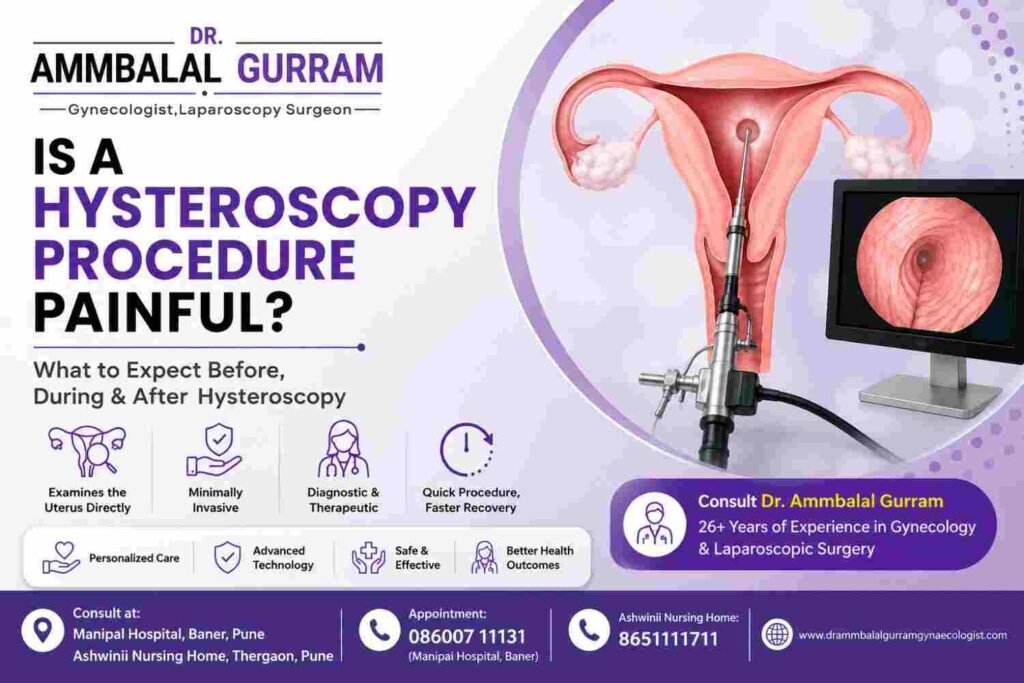
Is a hysteroscopy procedure painful? This is one of the most common questions women have before undergoing hysteroscopy. The answer depends on the type of hysteroscopy, the reason for the procedure, whether it is diagnostic or operative, and the type of anaesthesia or pain relief used. A diagnostic hysteroscopy may cause pressure, cramping, or discomfort similar to menstrual cramps, while an operative hysteroscopy may involve more discomfort because additional treatment is performed during the procedure.
Hysteroscopy is a minimally invasive procedure that allows a gynecologist to look directly inside the uterus using a thin, lighted instrument called a hysteroscope. It can help diagnose and treat conditions such as uterine polyps, fibroids, adhesions, abnormal uterine bleeding and some causes of infertility.
What Is Hysteroscopy?
Hysteroscopy is a gynecological procedure used to examine the inside of the uterus. A thin telescope-like instrument called a hysteroscope is gently introduced through the vagina and cervix into the uterine cavity. A camera attached to the hysteroscope allows the doctor to view the uterine lining on a monitor.
Depending on the purpose of the procedure, the doctor may perform:
- Diagnostic hysteroscopy – to examine the uterine cavity and identify abnormalities.
- Operative hysteroscopy – to treat an abnormality found inside the uterus.
- Hysteroscopy with biopsy – to collect a small tissue sample for laboratory examination.
Unlike traditional open surgery, hysteroscopy generally does not require an abdominal incision.
Is a Hysteroscopy Procedure Painful?
Hysteroscopy can cause some discomfort, but the level of pain varies from woman to woman. During a diagnostic hysteroscopy, some women experience:
- Mild cramping
- Pressure
- Period-like pain
- A sensation of fullness
- Brief discomfort when the hysteroscope passes through the cervix
Some women tolerate the procedure very well, while others may experience more discomfort. For operative hysteroscopy, the pain experience can be different because procedures such as removing a polyp or fibroid may be performed at the same time. Your gynecologist will decide what type of pain relief or anaesthesia is appropriate based on the procedure and your medical circumstances.
Why Is a Hysteroscopy Procedure Painful Cause Cramping?
The uterus is a muscular organ. During hysteroscopy, fluid is commonly used to gently expand the uterine cavity so that the doctor can clearly see the uterine lining. This distension can sometimes cause temporary uterine cramping. Passing the hysteroscope through the cervix can also cause discomfort, particularly if the cervix is sensitive or difficult to pass through.
The amount of discomfort depends on factors such as:
- Cervical sensitivity
- Individual pain tolerance
- Type of hysteroscope used
- Whether the procedure is diagnostic or operative
- Whether the cervix needs additional preparation or dilation
- Anaesthesia or pain relief used
- The condition being treated
Is Diagnostic Hysteroscopy Painful?
A diagnostic hysteroscopy is generally a shorter and less invasive form of hysteroscopy. It is performed to examine the uterine cavity and look for abnormalities.
During the procedure, you may feel:
- Mild cramping
- Pressure
- Brief discomfort
- Period-like cramps
Some women may have little or no significant pain. However, experiences vary considerably. A procedure that feels relatively comfortable for one woman may feel more uncomfortable for another. If you are concerned about pain, discuss your concerns with your gynecologist before the procedure. The doctor can explain the available pain-management options.
Is Operative Hysteroscopy More Painful?
Operative hysteroscopy may involve more discomfort than a simple diagnostic hysteroscopy, depending on what treatment is required. During operative hysteroscopy, the doctor can use specialized instruments passed through the hysteroscope to treat problems inside the uterus. For example, the doctor may:
- Remove an endometrial polyp
- Remove certain submucosal fibroids
- Treat uterine adhesions
- Remove selected retained tissue
- Take a biopsy
- Treat other abnormalities within the uterine cavity
Anaesthesia or sedation may be used depending on the procedure, its extent and the patient’s circumstances.
What Happens During a Hysteroscopy?
Understanding the procedure can help reduce anxiety.
Step 1: Pre-procedure Evaluation
- Before hysteroscopy, your gynecologist will review your symptoms, medical history and reason for the procedure.
- Depending on the situation, additional tests may be recommended.
- Your doctor may discuss:
- Pregnancy status
- Menstrual cycle
- Medications
- Previous surgeries
- Bleeding problems
- Medical conditions
- Previous fertility treatment
Step 2: Positioning
You will be positioned on the examination table in a similar position to a routine gynecological examination. The healthcare team will maintain appropriate privacy and comfort throughout the procedure.
Step 3: Introducing the Hysteroscope
- The hysteroscope is gently passed through the vagina and cervix into the uterus.
- The instrument is thin and contains a camera and light.
- The doctor can then view the inside of the uterine cavity on a monitor.
Step 4: Expanding the Uterine Cavity
A sterile fluid is generally introduced into the uterus to gently separate the uterine walls. This allows the doctor to clearly examine:
- Uterine lining
- Uterine cavity
- Endometrial polyps
- Fibroids projecting into the cavity
- Adhesions
- Other abnormalities
Some women experience temporary cramping during this stage.
Step 5: Diagnosis or Treatment
If the procedure is diagnostic, the doctor examines the uterine cavity and documents any abnormalities. If an abnormality needs treatment and operative hysteroscopy has been planned, specialized instruments can be introduced through the hysteroscope
How Long Does Hysteroscopy Take?
The duration depends on whether the procedure is diagnostic or operative A simple diagnostic hysteroscopy may be relatively short. An operative hysteroscopy may take longer depending on:
- The size and location of the abnormality
- Number of abnormalities
- Type of treatment required
- Whether tissue needs to be removed
- Whether a biopsy is required
Your gynecologist can provide a more accurate estimate based on your planned procedure.
What Type of Anaesthesia Is Used for Hysteroscopy?
The type of pain relief or anaesthesia depends on the procedure and individual circumstances. Depending on the situation, options may include:
- Local Anaesthesia: Numbing medication may be used around the cervix to reduce discomfort.
- Sedation: Sedation may help you feel relaxed and reduce awareness of the procedure.
- General Anaesthesia: For certain operative hysteroscopy procedures, general anaesthesia may be recommended.
- Other Pain-Relief Options: Your doctor may recommend appropriate medication before or during the procedure.
The choice depends on the planned hysteroscopy, your health, medical history and the facility where the procedure is performed.
What Does Hysteroscopy Feel Like?
Women may describe hysteroscopy in different ways. You may feel:
Before the procedure:
- Anxiety
- Pressure during examination
- Mild discomfort
During diagnostic hysteroscopy:
- Period-like cramps
- Pressure
- Brief cervical discomfort
After hysteroscopy:
- Mild abdominal cramps
- Vaginal spotting
- Period-like discomfort
The intensity and duration of symptoms vary. If you experience severe or worsening pain, it is important to contact your healthcare provider.
Is Hysteroscopy Painful After the Procedure?
- Most women may experience some temporary cramping or mild pelvic discomfort after hysteroscopy.
- You may also notice light vaginal bleeding or spotting.
- These symptoms often improve as you recover.
- Your doctor may recommend appropriate pain medication if needed.
- It is important to follow the specific aftercare instructions given by your gynecologist.
How Long Does Pain Last After Hysteroscopy?
- The duration of discomfort depends on the type of procedure performed.
- After a simple diagnostic hysteroscopy, mild cramps may settle relatively quickly.
- After operative hysteroscopy, discomfort can last longer because tissue may have been removed or treated.
- Your doctor will explain what symptoms are expected after your specific procedure.
When Should You Contact Your Doctor After Hysteroscopy?
Mild cramping and light spotting can occur after hysteroscopy. However, you should contact your healthcare provider if you experience concerning symptoms such as:
- Severe or increasing pelvic pain
- Heavy vaginal bleeding
- Fever or chills
- Foul-smelling vaginal discharge
- Dizziness or feeling very unwell
- Persistent symptoms that are getting worse
Your treating doctor can determine whether further evaluation is necessary.
Why Is Hysteroscopy Recommended?
A gynecologist may recommend hysteroscopy when there is a need to directly examine the uterine cavity.
Common reasons include:
- Abnormal Uterine Bleeding: Hysteroscopy may help identify abnormalities that could contribute to unusual or heavy menstrual bleeding.
- Endometrial Polyps: Polyps are growths arising from the uterine lining. Some polyps can be removed during operative hysteroscopy.
- Submucosal Fibroids: Certain fibroids grow into the uterine cavity and can sometimes be treated hysteroscopically.
- Infertility Evaluation: In selected women with infertility, hysteroscopy may be recommended when an abnormality within the uterine cavity is suspected.
- Recurrent Pregnancy Loss: Depending on the individual circumstances, evaluation of the uterine cavity may be considered in women with recurrent pregnancy loss.
- Uterine Adhesions: Scar tissue inside the uterus, sometimes called intrauterine adhesions, can affect the uterine cavity and may be treated hysteroscopically.
- Abnormal Ultrasound Findings: If an ultrasound suggests a polyp, fibroid or other abnormality inside the uterine cavity, hysteroscopy can provide direct visualization.
- Hysteroscopy for Infertility
Hysteroscopy can have an important role in selected infertility cases.
The uterine cavity needs to be suitable for embryo implantation and pregnancy. Conditions such as polyps, certain fibroids or adhesions may interfere with the uterine environment. However, hysteroscopy is not required for every woman undergoing infertility treatment or IVF.
Your fertility specialist or gynecologist will determine whether hysteroscopy is appropriate based on your symptoms, ultrasound findings, medical history and previous fertility treatment.
Can Hysteroscopy Improve IVF Outcomes?
This depends on the underlying problem. If a uterine cavity abnormality such as a polyp, certain submucosal fibroid or adhesion is identified, treating it may be beneficial in appropriately selected patients. However, hysteroscopy should not be presented as a treatment that automatically increases IVF success for every patient. The decision should be based on an individual fertility evaluation.
Hysteroscopy vs Ultrasound: What Is the Difference?
Both ultrasound and hysteroscopy can provide information about the uterus, but they work differently.
| Ultrasound | Hysteroscopy |
|---|---|
| Uses sound waves to create images | Uses a camera to directly view the uterine cavity |
| Non-invasive imaging test | Minimally invasive procedure |
| Can assess uterus and ovaries | Primarily examines the inside of the uterine cavity |
| Often used as an initial evaluation | May be recommended when more detailed evaluation is needed |
| Cannot directly remove a polyp or fibroid | Certain abnormalities can be treated during operative hysteroscopy |
In some cases, both tests may be useful
What Are the Benefits of Hysteroscopy?
Hysteroscopy offers several advantages when appropriately indicated
- Direct Visualization: The doctor can directly see the inside of the uterus rather than relying only on imaging.
- Minimally Invasive: There is generally no abdominal incision.
- Diagnosis and Treatment in the Same Procedure: When appropriate, certain abnormalities can be treated during operative hysteroscopy.
- Helps Investigate Abnormal Bleeding: It can help identify structural causes of abnormal uterine bleeding.
- Useful in Selected Fertility Cases: It can help evaluate and treat certain uterine cavity abnormalities relevant to fertility.
- Recovery Is Generally Faster Than Open Surgery: Because hysteroscopy does not usually involve abdominal incisions, recovery can be quicker than traditional open surgical procedures.
What Are the Risks of Hysteroscopy?
Although hysteroscopy is generally considered a safe procedure, complications can occur. Potential risks include:
- Infection
- Bleeding
- Cervical injury
- Uterine perforation
- Fluid-related complications
- Injury to surrounding structures in rare situations
- Complications related to anaesthesia
The actual risk depends on the type of hysteroscopy and the treatment being performed. Your doctor should explain the expected benefits and potential risks before the procedure.
How Should You Prepare for Hysteroscopy?
Your doctor will provide specific instructions depending on the type of procedure. You may be advised about:
- Eating and drinking before anaesthesia
- Medications
- Blood-thinning medicines
- Pregnancy testing
- Timing of the procedure in relation to your menstrual cycle
- Arranging transportation if sedation or anaesthesia is used
- Post-procedure activity restrictions
Always follow the instructions provided by your treating healthcare team.
What Is Recovery Like After Hysteroscopy?
Recovery varies according to the type of hysteroscopy. After a simple diagnostic procedure, many women can return to normal activities relatively quickly, depending on how they feel and the doctor’s advice. After operative hysteroscopy, you may need more recovery time. Temporary symptoms may include:
- Mild pelvic cramps
- Light vaginal bleeding
- Spotting
- Tiredness, particularly after sedation or anaesthesia
Your doctor will tell you when you can resume exercise, sexual activity, work and other normal activities.
Is Hysteroscopy Better Than D&C?
- Hysteroscopy and D&C (dilation and curettage) are different procedures.
- During hysteroscopy, the doctor can directly visualize the uterine cavity.
- A D&C involves dilating the cervix and removing tissue from the uterine cavity.
- In selected situations, hysteroscopy can provide more targeted diagnosis or treatment because the doctor can see the abnormal area directly.
- The appropriate procedure depends on the patient’s condition and the reason for treatment.
Does Hysteroscopy Affect Fertility?
- Hysteroscopy itself is not generally intended to reduce fertility.
- In appropriately selected patients, hysteroscopy may help diagnose and treat uterine cavity problems that could interfere with fertility.
- However, as with any medical procedure, risks exist, and the potential benefits should be weighed against those risks.
- If you are undergoing IVF or planning pregnancy, discuss the timing of hysteroscopy with your fertility specialist.
Frequently Asked Questions About Hysteroscopy
1. Is a hysteroscopy procedure painful?
It can cause cramping or discomfort, particularly during cervical passage and uterine distension. Pain varies between individuals and depends on the type of hysteroscopy and pain relief used.
2. Is hysteroscopy more painful than a normal gynecological examination?
Some women experience more discomfort than during a routine examination, while others tolerate diagnostic hysteroscopy well. The experience varies significantly.
3. Will I be awake during hysteroscopy?
It depends on the type of procedure and anaesthesia used. Some diagnostic procedures may be performed while you are awake, while operative hysteroscopy may involve sedation or anaesthesia.
4. How long does hysteroscopy pain last?
Mild cramps may occur for a short period after the procedure. Operative hysteroscopy may cause discomfort for longer. Follow your doctor’s instructions and report severe or worsening pain.
5. Can hysteroscopy be done without anaesthesia?
Some diagnostic hysteroscopy procedures can be performed without general anaesthesia, but the appropriate pain-control approach depends on the individual patient and procedure.
6. Can hysteroscopy remove fibroids?
Certain submucosal fibroids that project into the uterine cavity can be removed using operative hysteroscopy. Not all fibroids are suitable for hysteroscopic removal.
7. Can hysteroscopy remove polyps?
Yes. Endometrial polyps can often be removed during operative hysteroscopy.
8. Can I go home after hysteroscopy?
Many hysteroscopy procedures are performed as day-care procedures, but whether you can go home the same day depends on the procedure, anaesthesia and your recovery.
9. Can hysteroscopy help with infertility?
It can help identify and treat certain abnormalities inside the uterine cavity that may be relevant to fertility. It is not necessary for every infertility patient.
10. When should I see a doctor after hysteroscopy?
Contact your doctor if you develop severe pain, heavy bleeding, fever, chills, foul-smelling discharge or other symptoms that concern you.
Hysteroscopy Treatment in Pune With Dr. Ammbalal Gurram
If you have been advised to undergo hysteroscopy for abnormal uterine bleeding, uterine polyps, fibroids, adhesions, infertility evaluation, or another uterine cavity problem, discussing the procedure with an experienced gynecologist can help you understand what to expect.
Dr. Ammbalal Gurram is a senior consultant in gynecology and laparoscopic surgery in Pune with 26 years of experience. His practice includes hysteroscopic procedures as part of minimally invasive gynecological care. He also has advanced training in laparoscopic and robotic surgery.
Dr. Gurram provides hysteroscopy and gynecological surgical care at Manipal Hospital, Baner, and Ashwinii Nursing Home, Thergaon. His approach focuses on accurate diagnosis and choosing the least invasive treatment that is appropriate for the patient’s condition.