
Table of Contents
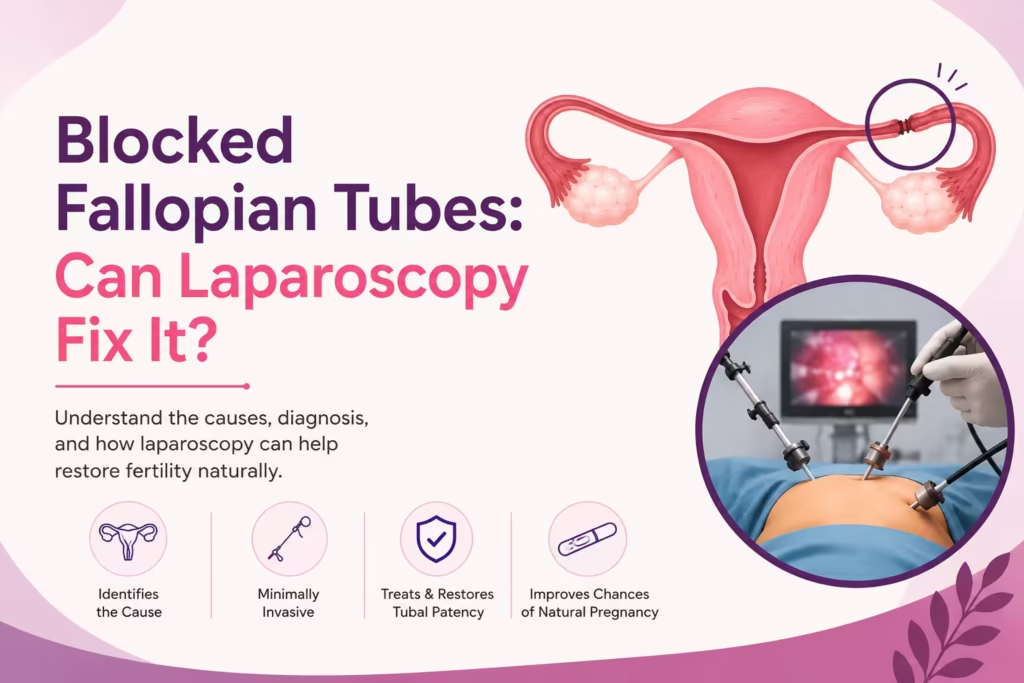
Blocked fallopian tubes are one of the most common causes of female infertility. Many women discover the blockage only after months of trying to conceive without success. Blocked fallopian tubes laparoscopy is often the first treatment doctors suggest, because it diagnoses the exact location of the blockage and treats it in the same procedure in many cases.
This blog explains what causes tubal blockage, how laparoscopy helps, what the procedure involves, and what women can realistically expect from recovery and future fertility.
What Are Fallopian Tubes and Why Do They Matter?
The fallopian tubes connect the ovaries to the uterus. Each month, an egg travels through one of these tubes toward the uterus, and fertilization normally happens inside the tube itself. If sperm cannot reach the egg because the tube is blocked, natural conception becomes difficult or impossible on that side.
A woman has two fallopian tubes. Blockage can happen in one tube or both. A single blocked tube reduces fertility but does not always prevent pregnancy, since the other tube may still function normally. Blockage in both tubes is a more serious concern and usually needs medical intervention.
What Causes Blocked Fallopian Tubes?
Several conditions can lead to tubal blockage. Common causes include:
- Pelvic Inflammatory Disease (PID) – Untreated infections, often from sexually transmitted bacteria, can scar and block the tubes.
- Endometriosis – Tissue growth outside the uterus can attach to the tubes and cause blockage or distortion.
- Previous Pelvic Surgery – Scar tissue from past abdominal or pelvic surgery can block or narrow the tubes.
- Ectopic Pregnancy – A previous pregnancy in the tube can leave scarring that affects tube function.
- Uterine Fibroids – Fibroids located near the tube opening can press on or block the passage.
- Congenital Abnormalities – Some women are born with structural differences in the tubes that cause blockage.
- Tuberculosis of the Genital Tract – In parts of India, genital tuberculosis remains a notable cause of tubal damage.
Many women with blocked tubes have no obvious symptoms. The blockage is often discovered only during fertility investigations.
How Is Tubal Blockage Diagnosed?
Doctors use a few standard tests to check whether the fallopian tubes are open or blocked:
- Hysterosalpingography (HSG) – An X-ray test where dye is passed through the uterus and tubes to check for blockage.
- Sonohysterography (SHG) – An ultrasound-based test using saline or contrast fluid instead of X-ray dye.
- Diagnostic Laparoscopy with Dye Test – A camera-based procedure that gives a direct visual confirmation of blockage, along with a dye test to check tubal flow.
Laparoscopy is considered the most accurate method because the surgeon sees the tubes and surrounding pelvic organs directly, rather than relying on an indirect image.
Blocked Fallopian Tubes Laparoscopy: How the Procedure Works
Laparoscopic surgery for blocked fallopian tubes is a minimally invasive procedure performed under general anaesthesia. The surgeon makes small incisions in the abdomen, usually near the navel, and inserts a thin camera called a laparoscope along with fine surgical instruments.
The procedure generally follows these steps:
- Anaesthesia and Positioning – The patient is given general anaesthesia and positioned for pelvic access.
- Creating Access Points – Small incisions, usually two to four, allow the camera and instruments to enter the abdomen.
- Inspecting the Pelvic Organs – The surgeon examines the uterus, ovaries, and tubes for blockage, scarring, or other abnormalities.
- Dye Test (Chromopertubation) – A blue dye is passed through the uterus to check whether it flows freely through both tubes.
- Clearing the Blockage – If the blockage is due to adhesions or mild scarring, the surgeon removes or separates the tissue during the same procedure.
- Closing the Incisions – The small cuts are closed with dissolvable stitches or surgical glue.
The entire procedure usually takes 30 minutes to an hour, depending on the extent of blockage and whether additional treatment, such as adhesion removal or cyst removal, is needed at the same time.
Can Laparoscopy Actually Fix Blocked Tubes?
Laparoscopy can treat certain types of blockage, but not all cases respond the same way. Outcomes depend on the cause and location of the blockage:
- Blockage from Adhesions or Scar Tissue – Laparoscopy works well here. The surgeon can cut and remove the scar tissue, often restoring normal tubal function.
- Blockage Near the Tube Opening (Fimbrial End) – This type responds moderately well to laparoscopic repair, though success depends on how much healthy tissue remains.
- Blockage in the Middle Section of the Tube – This is harder to repair surgically. In many cases, doctors recommend IVF instead of tubal repair for this type of blockage.
- Blockage from Tuberculosis – TB-related tubal damage usually does not respond well to surgical repair, since the tissue itself is often permanently damaged.
A fertility specialist evaluates the exact location and cause of blockage before deciding whether laparoscopic repair is worth attempting or whether IVF is the better path forward.
Laparoscopy vs IVF for Blocked Tubes
Couples often ask whether to try laparoscopic tubal repair or move directly to IVF. Both have a place depending on the situation:
- Laparoscopy is preferred when the blockage is mild, caused by adhesions, and located near the tube opening.
- IVF is usually recommended when both tubes are severely blocked, when blockage is in the middle segment, or when the woman has already tried tubal surgery without success.
- IVF bypasses the fallopian tubes completely, since fertilization happens outside the body and the embryo is placed directly into the uterus.
Some women benefit from laparoscopy first, since a successful repair allows for natural conception. Others move straight to IVF to avoid delaying treatment, particularly if age or ovarian reserve is also a concern.
Recovery After Laparoscopic Tubal Surgery
Recovery from laparoscopic surgery is faster than open surgery because the incisions are small. Most women can expect the following recovery pattern:
- Day 1 to 2 – Mild abdominal discomfort, bloating from the gas used during surgery, and fatigue are common. Most patients go home the same day or the next morning.
- Week 1 – Light activities can usually resume, though heavy lifting and strenuous exercise should be avoided.
- Week 2 to 3 – Most women return to normal daily activities and light work.
- 4 to 6 Weeks – Full recovery is typical, and doctors usually clear patients for trying to conceive naturally or starting fertility treatment after this period.
Some shoulder pain in the first day or two is normal and comes from the gas used to inflate the abdomen during surgery, not from the surgical site itself.
Chances of Pregnancy After Laparoscopic Tubal Surgery
Pregnancy rates after laparoscopic tubal repair vary depending on the severity of the original blockage, the woman’s age, and the presence of other fertility factors. Mild blockage cleared through laparoscopy generally has a reasonably good chance of natural conception within a year. Severe or bilateral blockage has lower success, which is why many doctors set a time limit, often six to twelve months, before recommending IVF if natural conception does not happen after successful surgery.
Age matters as much as the tube condition itself. Women under 30 with mild blockage have better odds than women above 35, since egg quality declines with age regardless of how open the tubes are after surgery.
When to See a Gynaecologist for Blocked Tubes
Consider a fertility evaluation if any of the following apply:
- Trying to conceive for over a year without success (or six months if above 35)
- History of pelvic infections or sexually transmitted infections
- Previous pelvic or abdominal surgery
- Known endometriosis or fibroids
- Past ectopic pregnancy
- Unexplained pelvic pain along with fertility difficulty
Early evaluation gives more treatment options. Waiting too long can reduce the chances of successful tubal repair and may narrow the window for other fertility treatments as well.
Frequently Asked Questions
1. Can blocked fallopian tubes be treated without surgery? In most cases, no. Medication does not reopen a physically blocked tube. Laparoscopy or IVF are the main treatment paths once blockage is confirmed.
2. Is laparoscopic surgery painful? Most women experience mild to moderate discomfort for a few days, managed with standard pain medication. It is significantly less painful than open abdominal surgery.
3. How long after laparoscopy can I try to conceive? Doctors generally advise waiting one full menstrual cycle, sometimes longer depending on the extent of surgery, before trying to conceive.
4. Does laparoscopy guarantee pregnancy? No procedure can guarantee pregnancy. Laparoscopy improves the chances of natural conception when the blockage is mild and treatable, but outcomes depend on multiple fertility factors.
5. Is laparoscopy safe for blocked fallopian tubes? Yes, laparoscopy is considered a safe, well-established procedure for both diagnosing and treating tubal blockage, performed under general anaesthesia with a low complication rate in experienced hands.
6. What if laparoscopy does not clear the blockage? If the blockage cannot be repaired, or if pregnancy does not happen naturally within the recommended time after surgery, IVF becomes the next recommended step.
Consult a Gynaecologist for Tubal Blockage
If you suspect blocked fallopian tubes or have been trying to conceive without success, an early consultation helps identify the exact cause and the right treatment path, whether that is laparoscopic repair or a direct move to IVF.
Dr. Ammbalal Gurram Gynaecologist & Laparoscopic Surgeon 22 years of experience in gynaecological and laparoscopic care
- Qualifications: MBBS, DGO, DNB, MNAMS, FMAS, FICMCH, FICOG, FIAGE, FICS (USA)
- Memberships: IMA, POGS, FOGSI, IAGE, ICOG, ICS
- Registration No.: 2000/01/0082
- Mobile: +91-8600711131
Book a consultation with Dr. Ammbalal Gurram to get a proper diagnosis of tubal blockage and a treatment plan suited to your specific case.